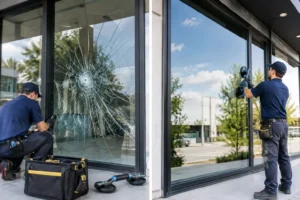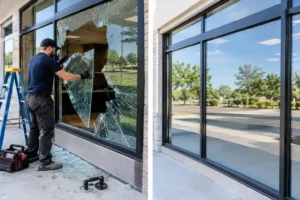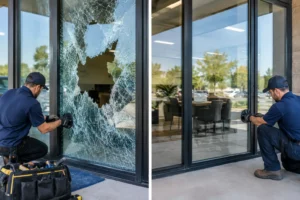

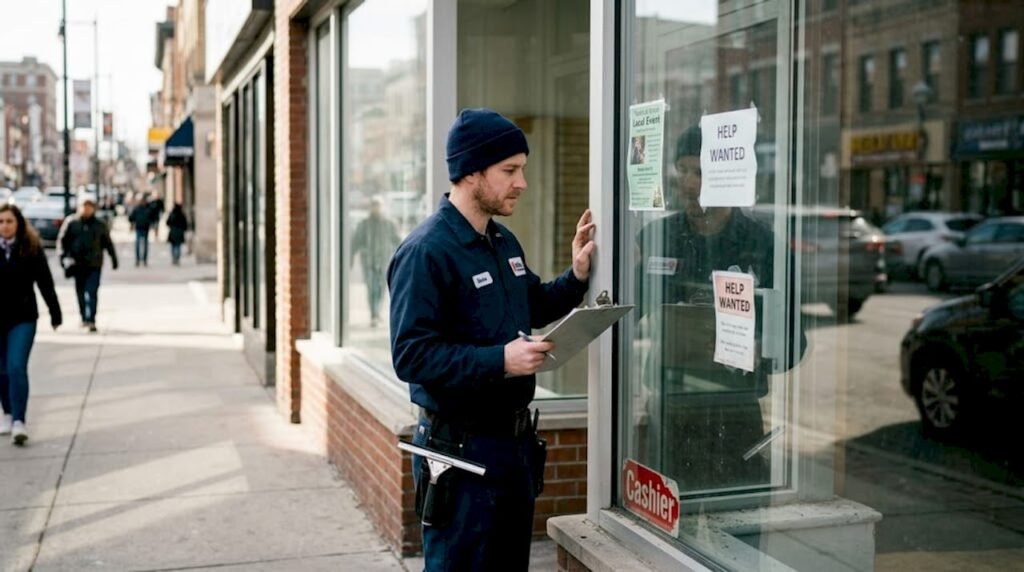
A $200 sealant repair left unattended for two years can quietly balloon into a $25,000 structural nightmare. Most retail owners in Maryland, Virginia, and Washington, DC, treat storefront glass as a set-it-and-forget-it asset, only calling for help when something shatters or leaks visibly. That mindset is expensive. This guide walks you through the real financial stakes of skipping glass inspections, what industry standards actually require, how often you need to inspect in the DMV climate, and how routine checks protect your brand, your customers, and your bottom line.
Table of Contents
- The true risks of neglecting storefront glass inspections
- What inspections actually involve: Standards and key checkpoints
- How often should you inspect? Industry benchmarks and local retail realities
- Maximizing business value: Safe, compliant, and attractive storefronts
- Why skipping inspections is a gamble Maryland retailers can’t afford
- Your next step: Expert storefront glass inspections and repairs
- Frequently asked questions
Key Takeaways
| Point | Details |
|---|---|
| Inspections save thousands | Catching small issues early prevents repairs from ballooning into costly damage. |
| Annual and quarterly checks | Pair yearly professional reviews with routine visual checks for best protection. |
| Boost safety and compliance | Regular inspections protect customers, meet insurance needs, and keep your storefront looking its best. |
| Documentation is vital | Always record inspection details to support insurance claims and maintenance planning. |
The true risks of neglecting storefront glass inspections
Having introduced the financial downside, let’s examine exactly what risks regular inspections prevent.
Most retail damage starts small. A hairline crack in a frame seal, a tiny gap where caulk has pulled away from the glass edge, or a barely-visible clouding on a double-pane unit. None of these look urgent. But each one is a pathway for water, air, and eventually serious structural damage to enter your building.
Water intrusion is the most common consequence of failed storefront glass seals. When moisture gets behind the glass or into the frame, it triggers mold growth inside walls, corrodes metal framing, warps wood substructures, and weakens the adhesive bonds holding your entire glazing system in place. In humid DMV summers and wet mid-Atlantic winters, that process accelerates fast. What starts as a $200 sealant repair can become a full frame replacement, interior remediation, and business closure for days or weeks.
The financial numbers are stark. Sealant inspections are critical, with annual visual checks and five-year adhesion tests recommended under ASTM C1394 and AAMA 502 standards. A single failed joint costs roughly $200 to repair when caught early. Leave it unaddressed for two years, and the resulting damage can run between $8,000 and $25,000. That’s not a hypothetical. That’s an empirical benchmark drawn from real facility management data.
Cost benchmark: A single uninspected sealant failure can escalate from a $200 repair to $25,000 in structural and water damage within two years.
Beyond the repair bill, there are liability and revenue costs. A cracked or weakened storefront pane is a safety hazard. If it fails during business hours, you’re facing potential injury claims, emergency boarding costs, and days of lost sales while repairs are completed. The exterior maintenance impact on customer perception and property value is also measurable. Customers notice a poorly maintained storefront, and first impressions drive foot traffic decisions.
Here’s a quick comparison of what happens with and without regular inspections:
| Scenario | Early detection cost | Deferred repair cost | Additional risks |
|---|---|---|---|
| Sealant failure | $200 | $8,000 to $25,000 | Mold, frame damage |
| Cracked pane | $300 to $500 | $1,500 to $4,000 | Safety liability |
| Frame corrosion | $400 to $800 | $5,000 to $15,000 | Structural failure |
| Water ingress | $150 to $400 | $10,000 or more | Mold remediation |
Key risks that regular inspections prevent:
- Water intrusion and mold growth behind walls and in frames
- Progressive frame corrosion that weakens the entire glazing system
- Sudden glass failure that creates safety hazards and liability exposure
- Revenue loss from emergency closures and repair downtime
- Insurance claim denials due to lack of documented maintenance records
Proactive glass door seal repairs are far less disruptive than emergency replacements. The business case for regular inspections isn’t just about avoiding worst-case scenarios. It’s about keeping your store open, your customers safe, and your maintenance budget predictable.
What inspections actually involve: Standards and key checkpoints
Knowing what can go wrong, the next step is understanding how professionals catch problems early.
A proper storefront glass inspection isn’t a quick visual scan. It follows a structured process tied to recognized industry standards, and it covers more than just the glass itself. The two primary standards governing commercial glazing inspections are ASTM C1394 (which addresses sealant joint performance) and AAMA 502 (which covers field testing of newly installed fenestration products). Together, they define what a professional inspection should examine and how often.
Annual visual and adhesion testing is the baseline requirement for commercial storefronts under ASTM C1394 and AAMA 502. Annual visual checks should happen every year without exception. Full adhesion testing, which involves physically probing sealant joints to check for bond failure, is recommended every five years. Many facility managers in the DMV area skip the adhesion test entirely, which is exactly how hidden failures go undetected until the damage is severe.

Here’s what a thorough inspection covers and why each element matters:
| Inspection item | Frequency | Why it matters |
|---|---|---|
| Visual sealant check | Annual | Catches early cracking, shrinkage, or pullback |
| Adhesion probe test | Every 5 years | Reveals hidden bond failures |
| Glass clarity check | Annual | Identifies fogging in insulated units |
| Frame condition review | Annual | Spots corrosion, warping, or loose hardware |
| Water intrusion signs | After storms, annual | Prevents mold and structural damage |
| Glazing bead integrity | Annual | Ensures glass is properly secured in frame |
A professional commercial glass inspection follows this checklist systematically. The technician examines each pane for chips, cracks, and surface damage. They check for clouding or condensation between panes in insulated glass units, which signals seal failure. Loose frames, rattling hardware, and gaps at frame corners are all documented. The sealant joints around each pane are visually assessed for cracking, shrinkage, or separation from the substrate.
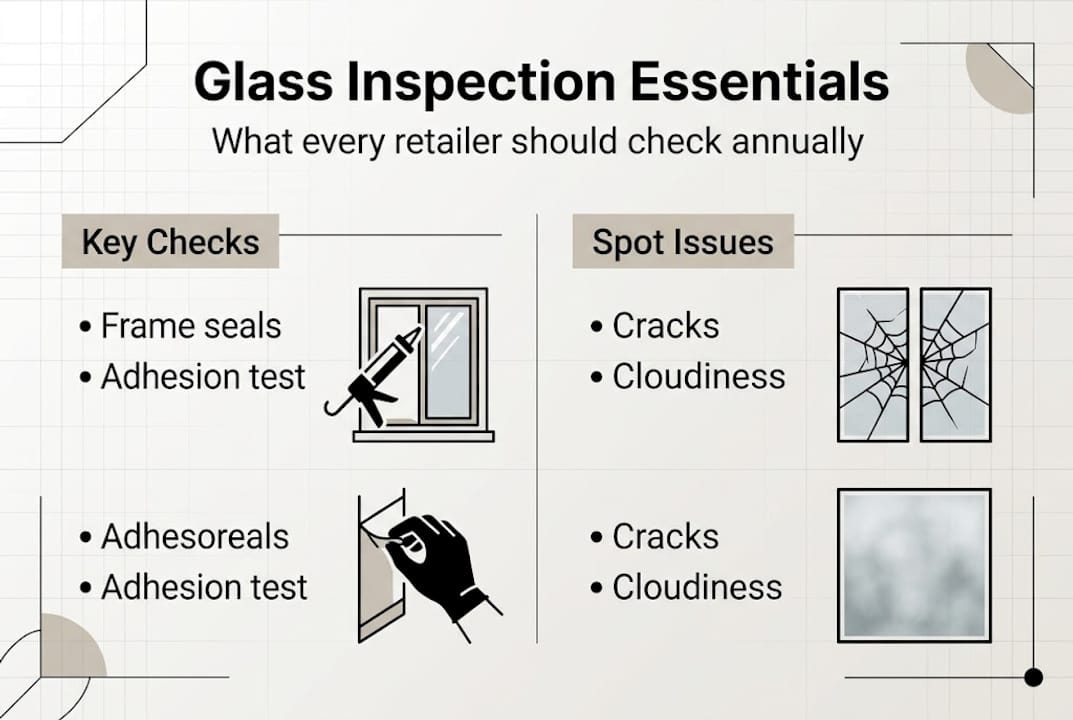
A detailed window repair guide can help you understand what each finding means and what repair options are available. Knowing the terminology before your technician arrives helps you ask the right questions and make informed decisions.
Step-by-step, here’s what to expect during a professional inspection:
- Pre-inspection walkthrough to identify visible concerns before close examination begins
- Frame and hardware check for corrosion, loose fasteners, and alignment issues
- Glass surface inspection for chips, cracks, scratches, and stress fractures
- Sealant joint assessment for adhesion quality, cracking, and gaps
- Insulated unit check for fogging, condensation, or seal failure between panes
- Water stain and moisture mapping to identify areas of active or past intrusion
- Documentation with photos and written notes for your maintenance records
Pro Tip: Photograph every inspection from the same angles each time. A side-by-side comparison from year to year makes it easy to spot gradual deterioration that might not be obvious in a single visit. These photos also strengthen insurance claims and warranty disputes significantly.
A solid commercial exterior cleaning guide for property managers reinforces why combining cleaning and inspection into a single scheduled visit saves time and ensures nothing gets missed.
How often should you inspect? Industry benchmarks and local retail realities
Now that the inspection process is clear, the next question is how often you really need to schedule it.
The short answer is: more often than most retail owners currently do. Industry standards set the minimum. Local conditions in Maryland, Virginia, and DC push the recommended frequency higher.
Formally, annual professional inspections meet the baseline requirements under ASTM and AAMA standards. But for active retail storefronts in the DMV region, quarterly visual checks are a smarter practice. The reason is straightforward. The mid-Atlantic climate is tough on glass systems. Freeze-thaw cycles in winter cause sealant joints to expand and contract repeatedly, accelerating cracking and adhesion failure. Heavy spring rains test every seal and frame joint. Summer heat and UV exposure degrade sealant chemistry over time. Fall brings temperature swings that stress glazing hardware.
The cost escalation from $200 to $25,000 over two years of inaction is a powerful reminder that quarterly checks cost almost nothing compared to the alternative. A quick visual walkthrough of your storefront takes 15 minutes and can catch early warning signs before they become expensive problems.
When should you inspect beyond your regular schedule?
- After any significant storm, including high winds, hail, or heavy rain events
- Following any renovation or construction near your storefront, since vibration and debris cause micro-damage
- When you notice water stains on interior walls or floors near the storefront
- After a break-in attempt or vandalism, even if the glass appears intact
- When tenants or staff report drafts near windows or doors
- Before renewing your commercial lease, to document the condition of fixtures
- After extreme temperature events, such as hard freezes or heat waves above 95°F
Our team has handled downtown DC repair cases where store owners called for emergency repairs that a quarterly walkthrough would have prevented entirely. The pattern is consistent. A small crack noticed in January becomes a failed pane by March after freeze-thaw cycles finish the job.
Professional window cleaning visits are also an ideal time to combine a basic visual inspection. A trained eye on your glass every quarter, even informally, catches problems early and keeps your maintenance log current.
The business case for frequent inspections is simple. Quarterly checks cost you time. Skipping them costs you money, customers, and potentially your lease.
Maximizing business value: Safe, compliant, and attractive storefronts
Regular inspections do more than prevent crises. They build long-term business value.
There’s a version of this conversation that’s purely about avoiding disaster, and we’ve covered that thoroughly. But there’s an equally important version about what well-maintained storefront glass actually does for your business when everything is working correctly.
First, aesthetics matter more than most owners admit. Your storefront glass is the first thing every customer sees. Cloudy panes, visible cracks, stained frames, and peeling sealant signal neglect. That perception transfers directly to how customers feel about your products and service. Clean, clear, well-maintained glass communicates professionalism and attention to detail before anyone steps inside.
Second, inspected and maintained glass systems are more resistant to break-ins. Properly seated glass in solid frames with intact sealant is significantly harder to compromise than glass in deteriorating frames. Regular inspections catch frame loosening and hardware failures that would otherwise make your storefront an easier target.
The benefits of a consistent inspection program include:
- Better customer perception from a clean, professional-looking storefront
- Improved break-in resistance through properly maintained frames and glazing
- Easier regulatory compliance with documentation ready for inspections or audits
- Higher lease renewal leverage with a well-documented maintenance history
- Reduced insurance premiums in some cases, since documented maintenance reduces risk
- Extended fixture lifespan, protecting investments of $8,000 or more in high-end glazing
Structural silicone used in commercial glazing has a 20 to 30-year lifespan, but that full lifespan is only achievable with annual inspections and timely maintenance. Neglect cuts that lifespan dramatically. A $10,000 storefront glazing system that should last 25 years might need replacement in 10 years without proper care.
Understanding how to address glass damage proactively is the foundation of any solid maintenance strategy. The same principles that protect residential glass apply at a larger scale for commercial storefronts.
Pro Tip: Add your inspection records to your store’s emergency preparedness files, not just your maintenance logs. When a storm hits and you need to file an insurance claim quickly, having dated photos and technician reports on hand speeds up the process and strengthens your case.
The connection between security glass and commercial safety is also worth understanding. Knowing what type of glass you have and its current condition helps you make informed decisions about upgrades when inspections reveal deterioration.
Why skipping inspections is a gamble Maryland retailers can’t afford
Let’s be direct about something most glass maintenance articles won’t say plainly. The “out of sight, out of mind” approach to storefront glass isn’t just risky. It’s a financial decision with a predictable outcome, and that outcome is expensive.
We see it regularly in the DMV area. A store owner notices a small gap in the sealant around a corner pane. It doesn’t look serious. There’s no immediate leak. The repair cost feels unnecessary when business is tight. So it gets added to the “someday” list. Two seasons later, water has worked its way into the frame, mold is growing behind the drywall, and the repair bill is closer to $10,000 than $200.
The cost difference between early and late intervention is not subtle. A single failed joint costs $200 when caught promptly and $8,000 or more when ignored. That’s a 40x cost multiplier for doing nothing.
The most expensive lessons we see come not from dramatic failures but from the absence of documentation. When a store files an insurance claim after water damage, the first question is whether regular maintenance was performed. Without inspection records, claims get denied or reduced. The cost of the inspection program you skipped becomes the deductible you’re now paying out of pocket.
Our West End DC repair work has shown us repeatedly that the stores with the worst damage are rarely the ones with the oldest glass. They’re the ones with the least documentation. Annual inspections are cheap. Emergency repairs, insurance disputes, and business downtime are not.
Your next step: Expert storefront glass inspections and repairs
If this article has made one thing clear, it’s that storefront glass maintenance is not optional for retail businesses in Maryland, Virginia, and Washington, DC. The financial, safety, and reputational stakes are too high.
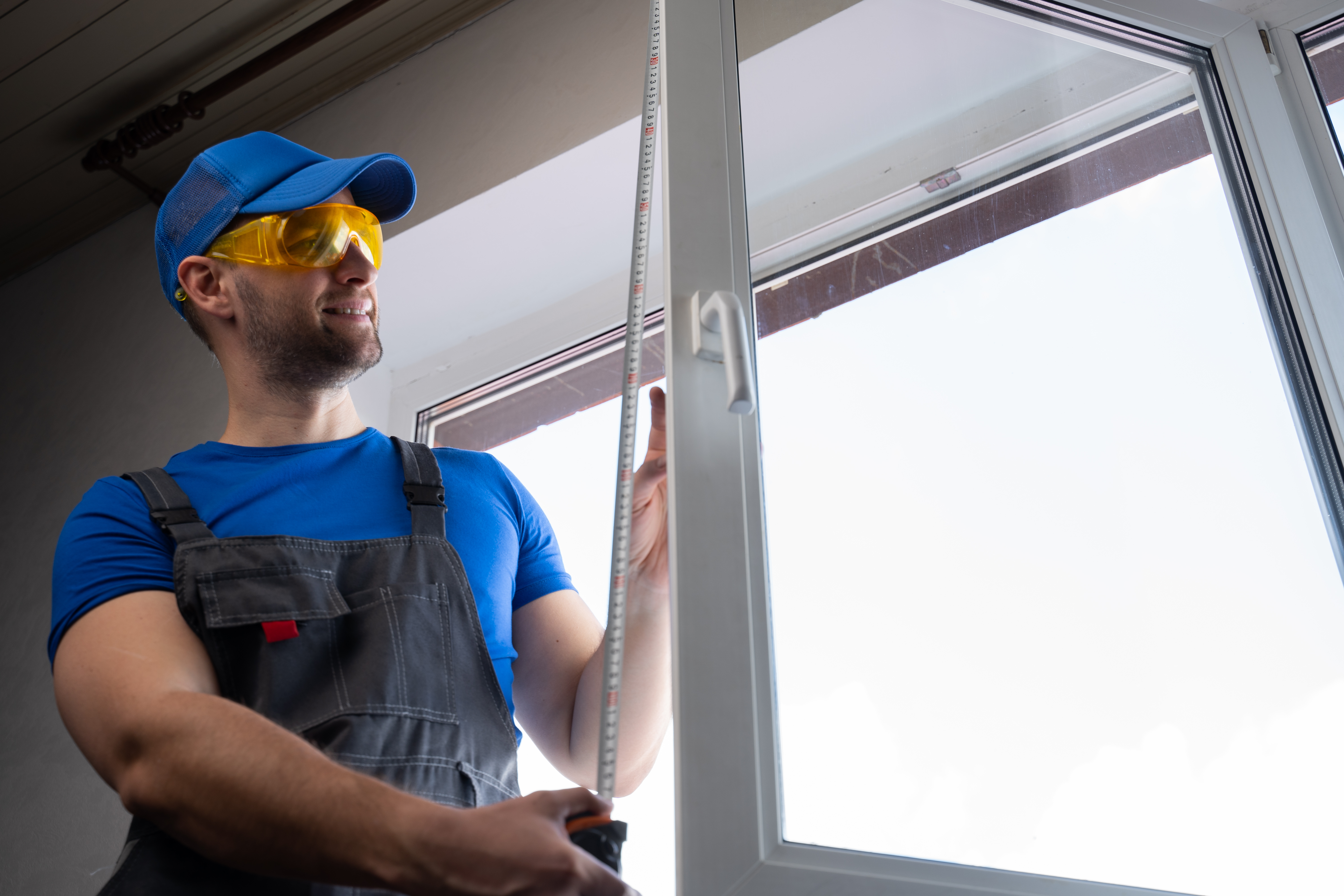
Quick Glass Repair’s team of skilled technicians serves the entire DMV area with professional commercial glass inspections and services designed specifically for retail storefronts. Whether you need a scheduled annual inspection, a quarterly walkthrough program, or an urgent repair, we respond fast and document everything. Explore our full range of repair services in the DMV to find the right fit for your business. Don’t wait for a $200 problem to become a $25,000 emergency. Book your inspection today and protect the investment you’ve built.
Frequently asked questions
How often should retail businesses inspect storefront glass?
Retail stores should conduct visual inspections quarterly and schedule a thorough professional review at least once per year, following ASTM and AAMA standards for commercial glazing systems.
What is the main risk of skipping annual glass inspections?
Ignored seal problems or cracks allow water intrusion, mold growth, and frame corrosion, with repair costs escalating from $200 to $25,000 when problems go unaddressed for two years.
Are storefront glass inspections required by law or insurance?
Specific legal requirements vary by jurisdiction, but regular inspections meet many commercial insurance maintenance terms and provide the documented records needed to support damage claims.
What should be included in a storefront glass inspection?
Professional inspections check for cracks, cloudy panes, loose frames, and sealant breakdown, following ASTM C1394 and AAMA 502 checkpoints for commercial glazing systems.
How can I keep records of my glass inspections?
Photograph and document each inspection from consistent angles, storing dated photos and technician reports in both your maintenance logs and your emergency preparedness files for warranty or insurance use.